
nutrition · guide
Healthy snacks with no added sugar: what to look for on the label
Plenty of snack bars sold as healthy hide syrups, sweeteners or fruit concentrates. A practical guide to reading the ingredient list, with a short list of snacks that pass.
Healthy snacks with no added sugar are easy to find on the shelf and surprisingly hard to find on the label. The front of the pack does the selling; the back does the telling. This guide is about the back. It covers what “no added sugar” means under EU rules, the names sugar travels under, how to read an ingredient list in the right order, and which kinds of snack tend to pass once you do. We make one of them, so we have declared our interest near the end.
What “no added sugar” means in the EU
In the European Union, nutrition claims are governed by Regulation (EC) No 1924/2006. Its annex lists the claims a pack may carry and the conditions for each. “With no added sugars”, and any wording that would mean the same thing to a shopper, is allowed only where nothing has been added to the food for its sweetening properties: no added mono- or disaccharides, and no other food used to sweeten it. Where the food naturally contains sugars, the label should also say so, with the words “contains naturally occurring sugars”.
Two things follow. First, “no added sugar” is a statement about the recipe, not about the sugar content. A pack of dried apricots can carry it and still be a third sugar by weight, because the sugar was in the fruit. Second, the same annex sets separate thresholds for “low sugars” and “sugars-free”, and they are much stricter: “sugars-free” means no more than 0.5 g of sugars per 100 g. Do not read one claim as if it were the other.
A related rule matters here. Sweeteners are additives, not sugars, so a bar sweetened with maltitol or stevia can still say “no added sugar”. EU labelling rules require the phrase “with sweetener(s)” to accompany the name of such a food. It is usually in small type. Look for it.
The names sugar travels under
An ingredient list rarely says “sugar” once and stops. It says it several times, under different names, so that no single one rises to the top. The common ones:
- Syrups. Glucose syrup, glucose-fructose syrup, rice syrup, agave syrup, date syrup, maple syrup, invert sugar syrup. Honey. All sugar by function, whatever the plant.
- Concentrates and purées. “Fruit juice concentrate”, “apple juice concentrate”, date paste, grape must. Fruit-derived, and added for sweetness, which is exactly what the regulation is about.
- Single words ending in -ose. Dextrose, fructose, sucrose, maltose, lactose. Dextrose is glucose under another name.
- Maltodextrin. A starch-derived powder used for bulk and texture. It sits in the carbohydrate line of the nutrition table rather than the sugars line, which is one reason it turns up in snacks that make a point of their sugar line.
- Sweeteners. Sugar alcohols such as maltitol, sorbitol, xylitol and erythritol; intense sweeteners such as sucralose and steviol glycosides. Legal in a “no added sugar” product, and always declared.
None of these is forbidden, and some are useful. The point is to notice when a pack that reads “no added sugar” on the front has reached that claim with half a dozen substitutes on the back.
Read the order, not the front
EU rules require ingredients to be listed in descending order of weight. The first three names tell you what the product mostly is. If the first is oats and the second is a syrup, the bar is oats held together with sugar. If the first is a fruit and the second is egg white, it is fruit.
Count the ingredients while you are there. A snack with twenty is not automatically bad, but every name after the fifth is doing a job the food could not do by itself: binding, sweetening, softening, colouring, keeping. Look, too, for percentages. Where a pack makes a point of an ingredient on the front, the list must say how much of it is inside. “Made with real fruit” is a sentence; “baked apples (99%)” is a number.
Fibre and protein: the satiety signals
Most people judge a snack by whether it carries them to the next meal, and fibre and protein are the two lines on the panel they use to guess. Here again the EU has thresholds. A food may call itself a “source of fibre” at 3 g per 100 g or 1.5 g per 100 kcal, and “high fibre” at double those figures. “Source of protein” requires at least 12 per cent of the food’s energy to come from protein; “high protein”, at least 20 per cent.
Use these as a scale rather than a pass mark. A snack with 5 g of fibre per 100 g is in different territory from one with 1 g, and a pack that claims “high protein” has been measured against a real line. Whole fruit, nuts and seeds bring their fibre with them. Refined snacks have to have it added back, often as inulin or chicory root fibre, which counts, but the list will show it.
Per portion or per 100 g
The nutrition table must show values per 100 g; per portion is optional, and the manufacturer chooses the portion. So compare products per 100 g, and judge what you are about to eat per portion. Both numbers are honest; they answer different questions.
One trap with dried and baked fruit. Take the water out of an apple and the sugars concentrate: per 100 g, dried fruit looks alarming next to fresh. Per portion, it is the sugar of the fruit that went in, and no more. A 50 g flourless apple cake reads 320 kcal and 52 g of sugars per 100 g, and 160 kcal and 26 g of sugars per cake. Same product, two scales, no trick.
The five-point label checklist
- Find the first three ingredients. They are the product. Everything else is seasoning or engineering.
- Scan for sugar’s other names. Syrups, concentrates, anything ending in -ose, maltodextrin. More than one is a pattern.
- Check for “with sweeteners”. If the pack says “no added sugar” and also says this, you know how it got there.
- Read fibre and protein per 100 g. Three grams of fibre per 100 g is the EU’s lowest bar; whole fruit and nuts clear it without help.
- Look at the portion, then the pack. A 30 g portion means little if the bag is 120 g and you are going to finish it.
Which snacks pass, and which do not
Types, not brands. Every category has honest and dishonest members; the label decides.
| Snack | What to check | Usually |
|---|---|---|
| Dried fruit | Sulphites, which must be flagged as an allergen; added oil; berries infused with sugar or juice before drying | Passes when the list is one word |
| Granola bars | The binder. Oats need syrup or honey to hold their shape | Fails on the second ingredient |
| Protein bars | Sweeteners, maltitol, a long list | Passes on protein, rarely on the checklist |
| Rice cakes | Plain ones have no sugar and little else; flavoured ones add it | Passes, with little fibre or protein to show for it |
| Nuts | Salt, oil, “honey roasted”, coatings | Passes when plain |
| Baked-apple pastila | Ingredient count, and the naturally occurring sugars | Passes when the list is apples and egg white |
Fresh fruit passes without a label. It is also the reference point for everything above: if a packaged snack has more ingredients than an apple and less fibre, ask what the packaging was for.
Where Semers fits, honestly
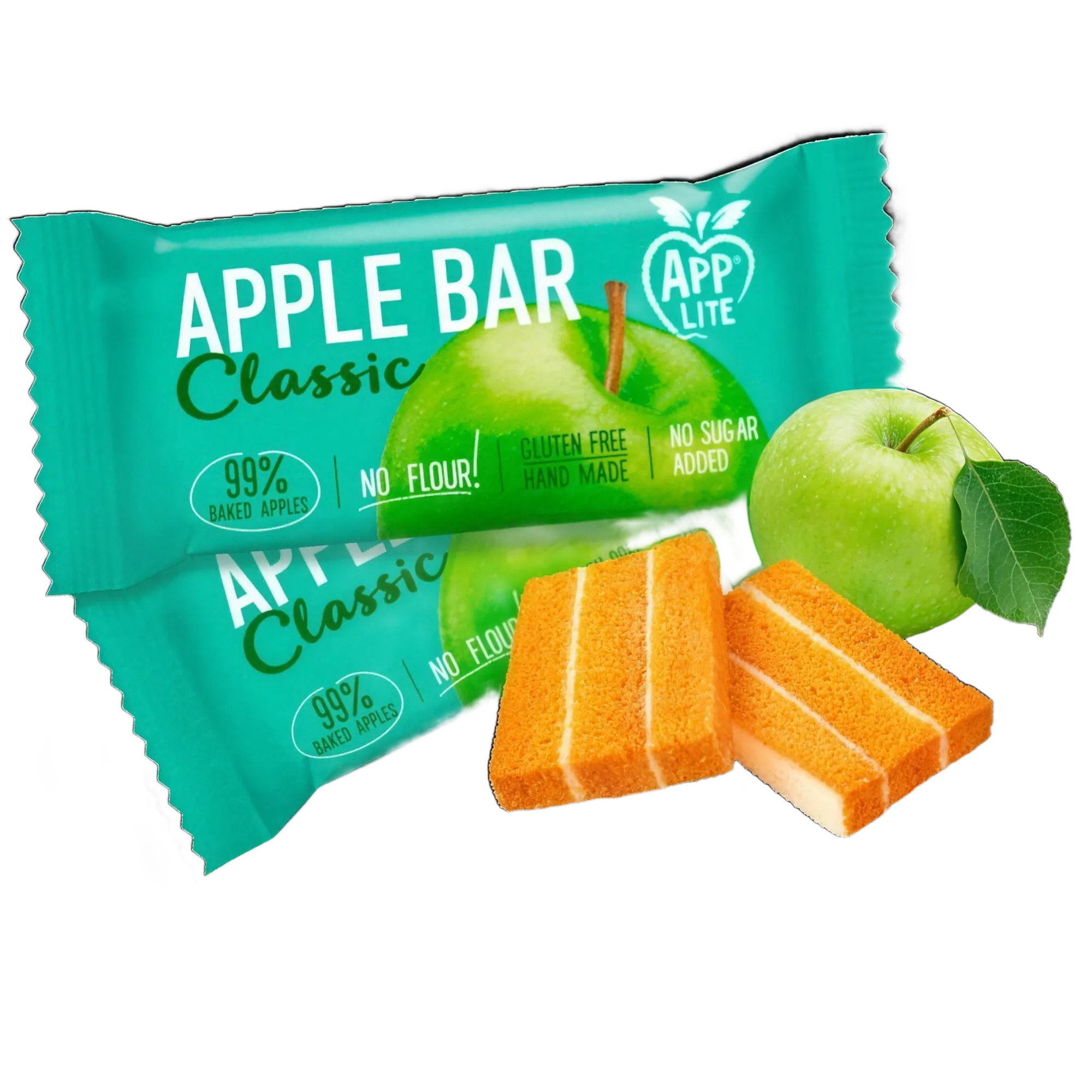
Our Apple Bar is baked apples (99%) and egg white. That is the full list; the Berry Mix version adds blackcurrants, cranberries, lingonberries and blueberries and nothing else. Its sugars are the fruit’s own, which is why the pack says no added sugar and makes no claim about how much sugar is inside. It is not a protein snack and does not pretend to be. The sweetness comes from the oven, not from a syrup: baking drives off the water and caramelises what the apple already had. How its label compares with chocolate and granola bars is on why pastila; the process itself is on how it’s made.
Lunchbox and desk ideas
No-added-sugar snacks work best in pairs: one for sweetness, one for staying power.
- The desk drawer. A box of apple bars and a bag of plain almonds. The bars have a twelve-month shelf life, so the box can wait for the slump.
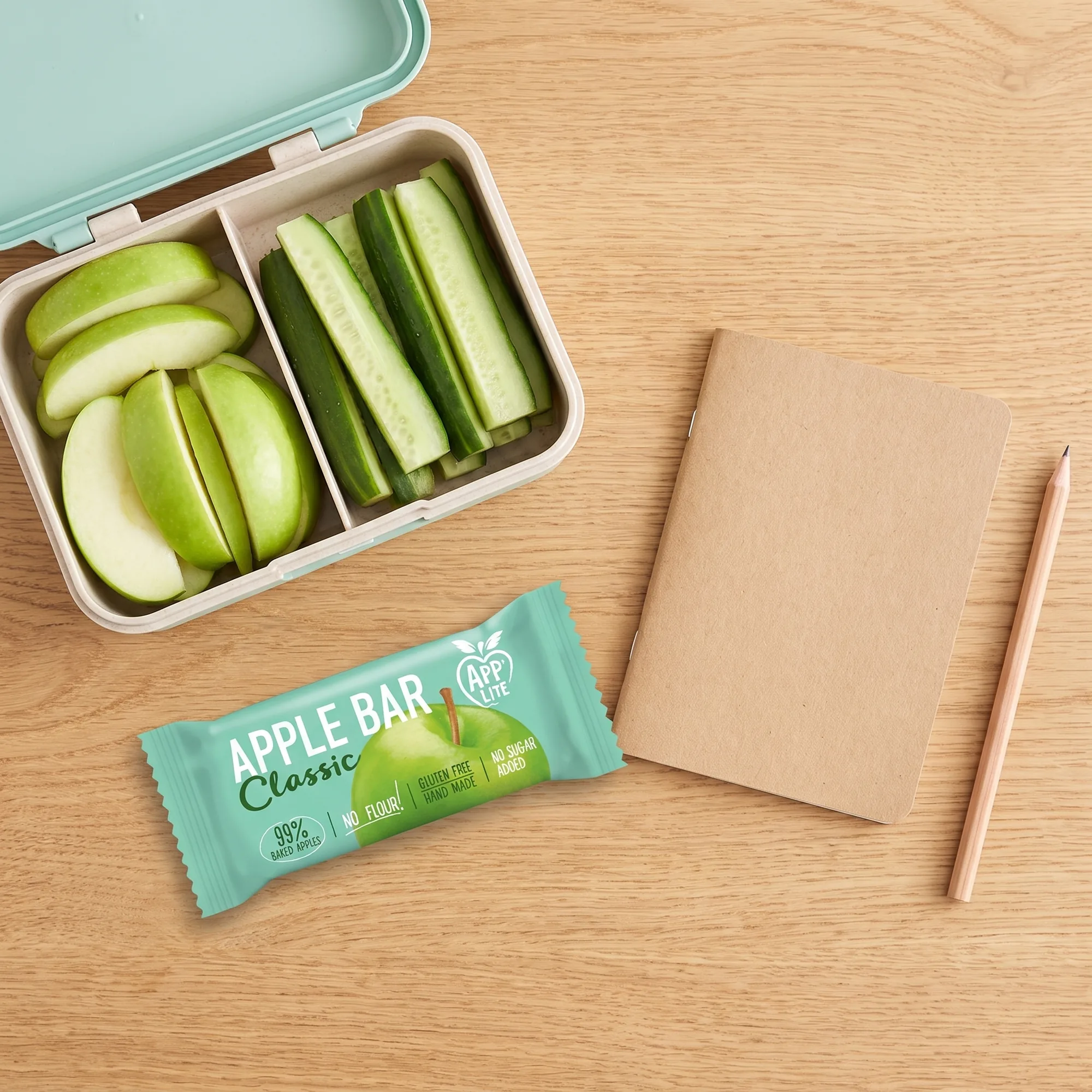
- The lunchbox. A bar, a hard-boiled egg, cucumber sticks. Nothing leaks, nothing melts, nothing needs a spoon.
- Breakfast at the desk. An App’Lite dessert square crumbled over plain yoghurt or porridge instead of a spoon of jam.
- The shared shelf. The 500 g carton of classic apple dessert, each piece wrapped on its own.
- Something crisp. Apple meringues for the moment that usually calls for biscuits.
For an office, build a box of bars, meringues and flourless cakes to put a bit of everything on the shared shelf.
A note before you go
This article is general information about food labelling, written by people who make snacks, not by clinicians. It is not medical or dietary advice. If you manage a health condition through what you eat, take the label to someone qualified. And whatever you buy, turn the pack over first. The FAQ answers the rest, and the shop has the bar.
From the bakery
The bar these notes are about.
- 99% baked apples, plus egg white
- No added sugar, no flour, gluten free
- Classic or Berry Mix, 35 g a bar
- Keeps 12 months
Also read
Keep reading.
Taste the subject
Reading about apples is the slow way to find out.
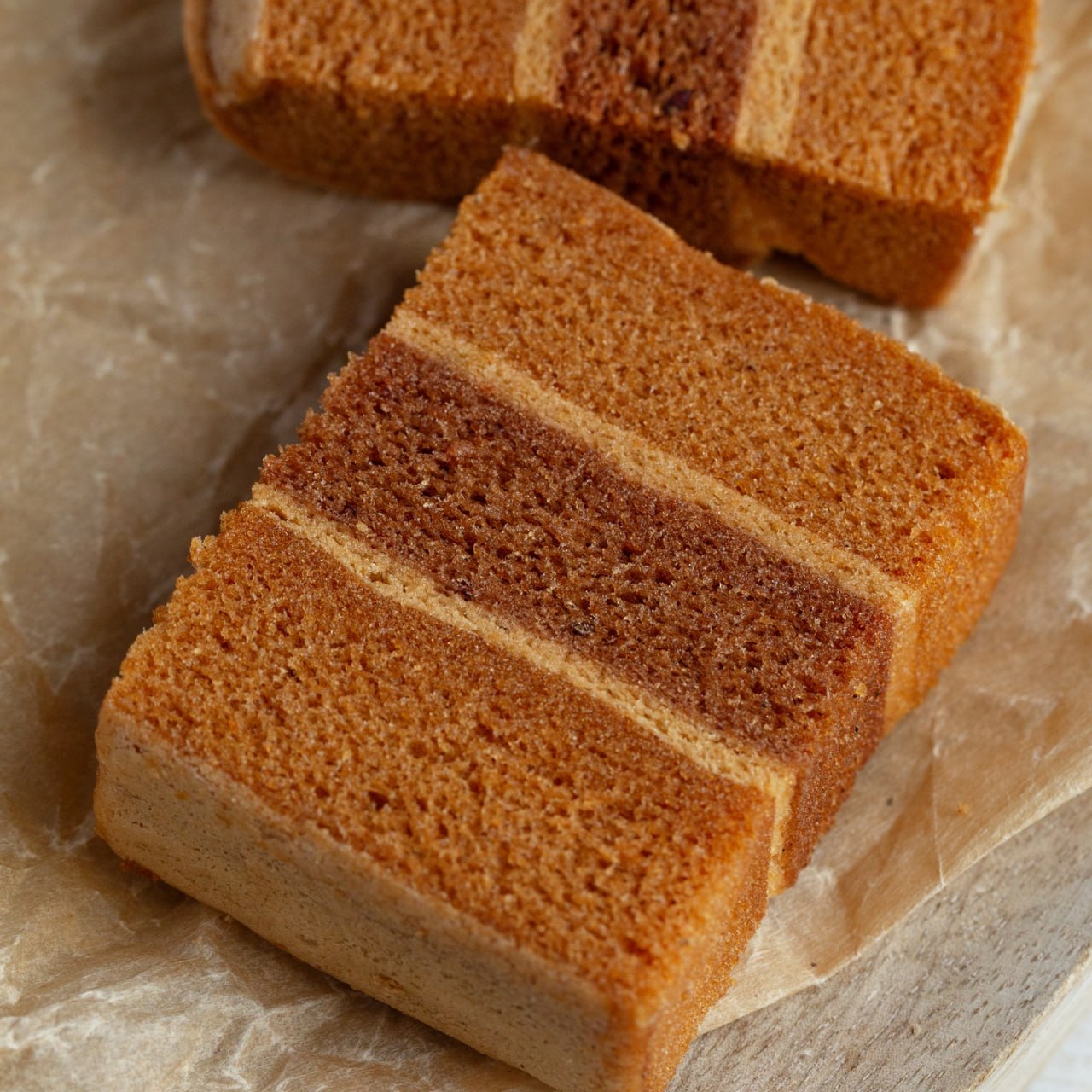
Apple bars, meringues and baked-apple desserts, made in Riga with no added sugar. Parcels leave in 1–2 business days and ship across Europe; orders over €20 ship free.